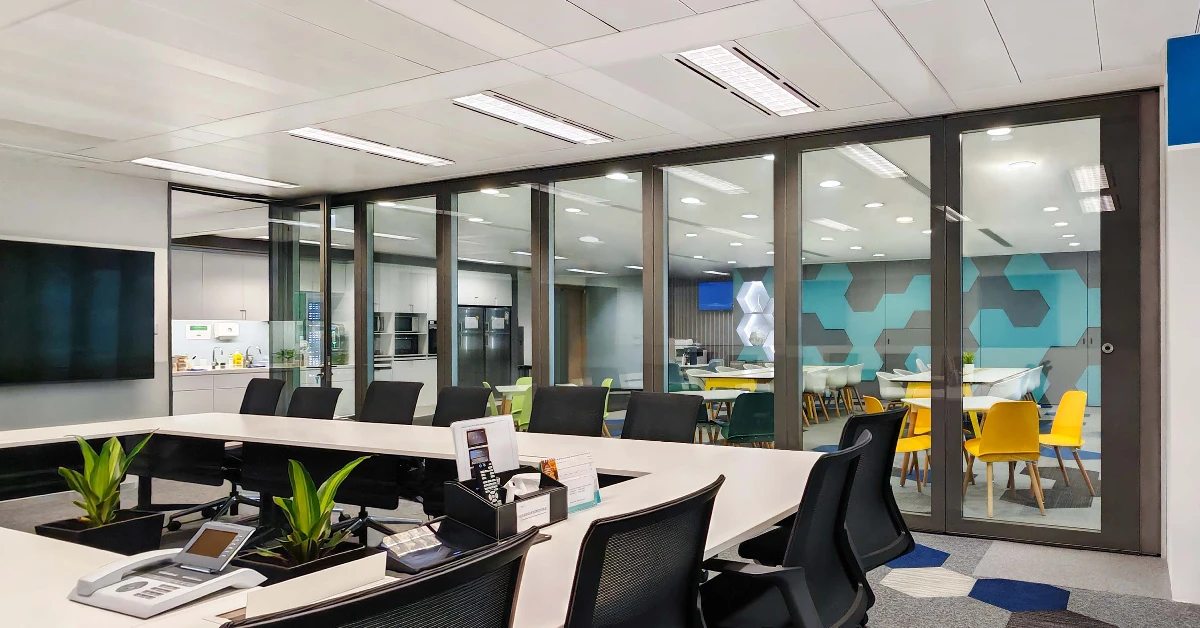

Glass partitions have become a defining feature of modern office design. They allow natural light to flow through interiors, create a sense of openness, and support flexible spatial planning. However, one of the most common challenges designers face is maintaining visual privacy without losing transparency.
In today’s workplace, privacy is no longer just about blocking sound or creating enclosed rooms—it also includes controlling sightlines, reducing distractions, and offering employees moments of focus. Achieving this balance requires thoughtful design decisions that go beyond simply installing glass walls.
The Role of Visual Privacy in Workspaces
Visual privacy refers to the ability to limit direct visibility into a space while still maintaining an open and connected environment. In offices, this is especially important for meeting rooms, focus areas, and managerial spaces where confidentiality or concentration is needed.
Without visual control, glass partitions can create a “constant exposure” effect. Employees may feel observed, distracted, or unable to fully relax during discussions. This is why modern workspace design increasingly treats privacy as a layered experience rather than an all-or-nothing choice.
Design Techniques for Balancing Transparency and Privacy
1. Gradient and Frosted Glass Treatments
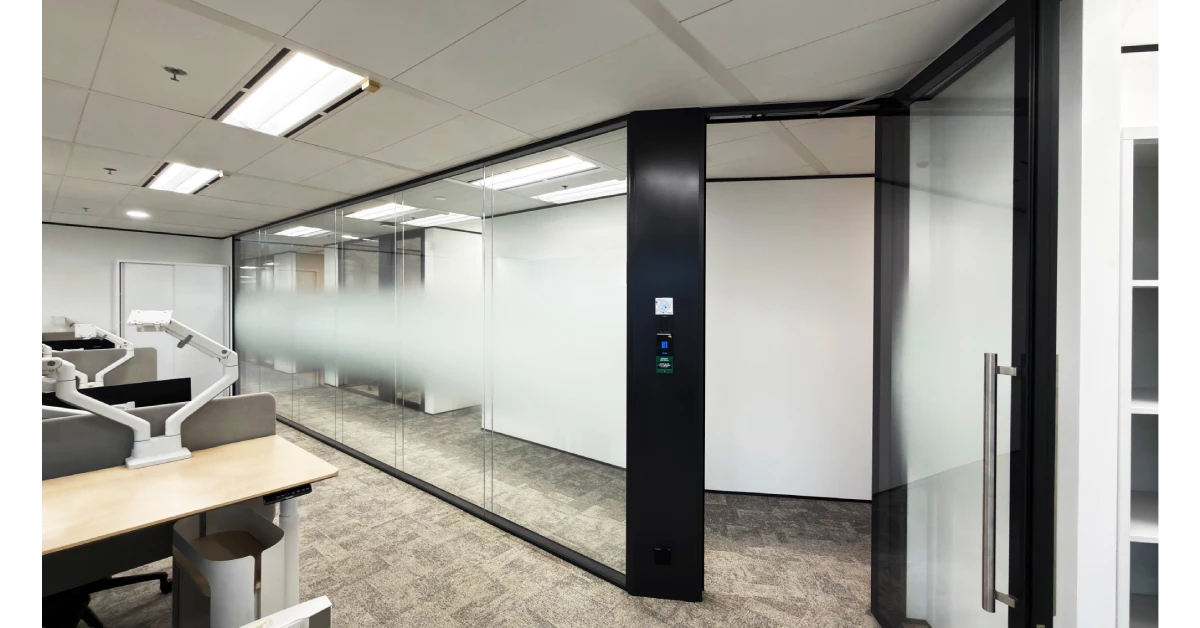
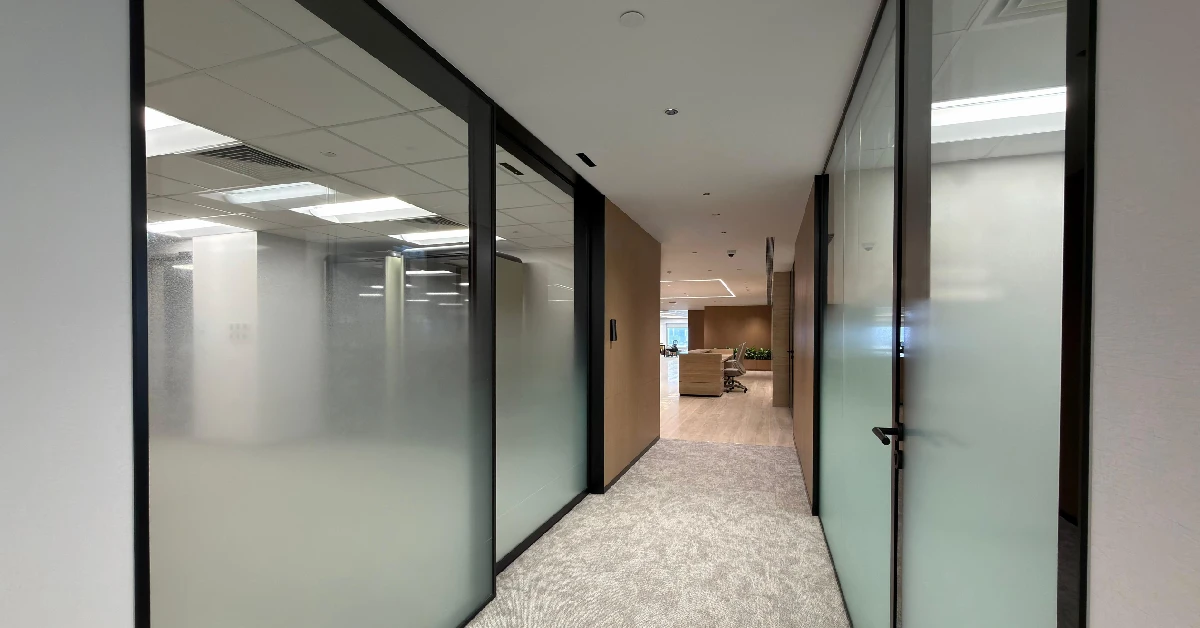
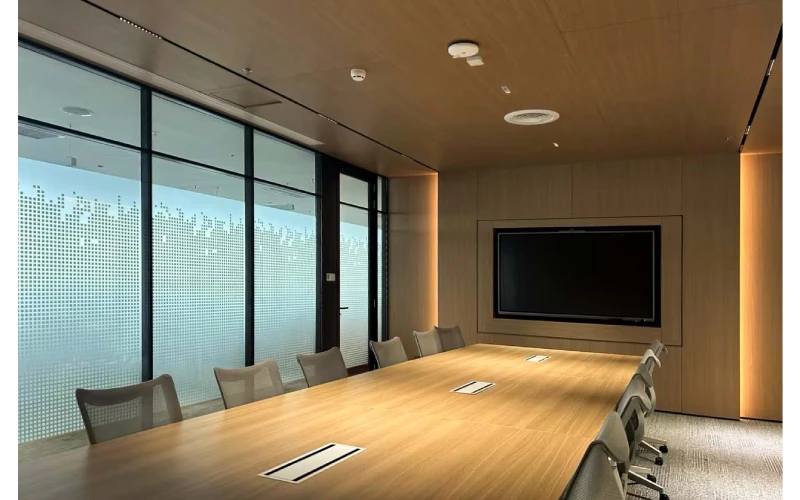
One of the most widely used methods is applying gradient films or frosted finishes to glass panels. These treatments allow light transmission while obscuring direct lines of sight at eye level. Gradient designs are especially effective because they preserve openness at the top of the partition while protecting seated privacy.
2. Strategic Zoning and Layout Planning
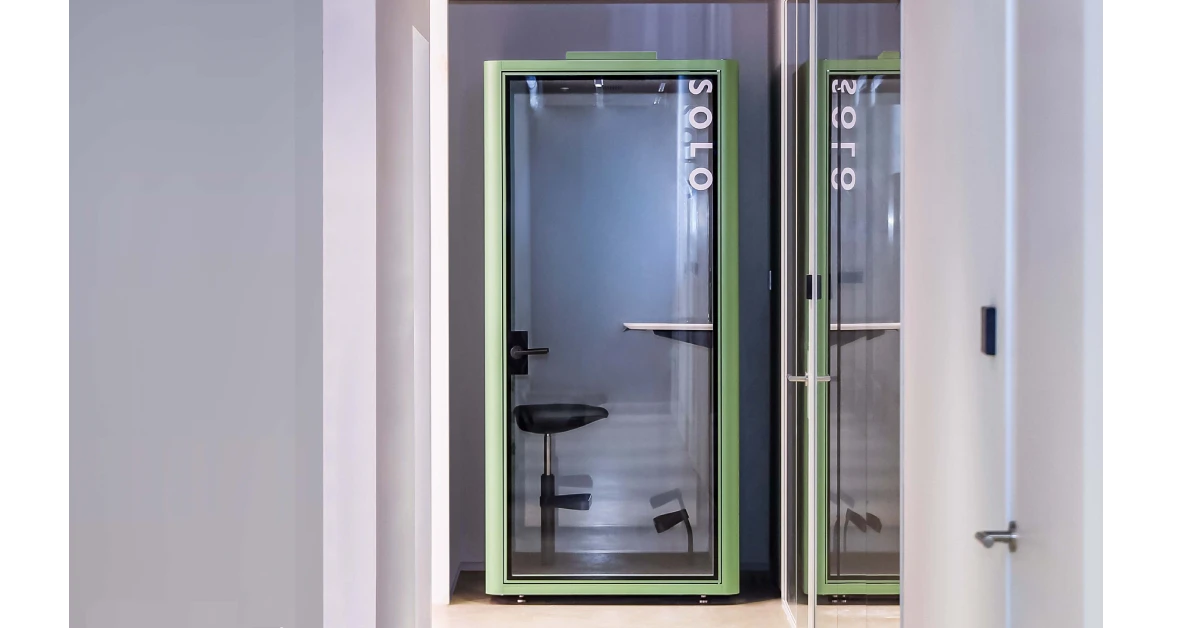
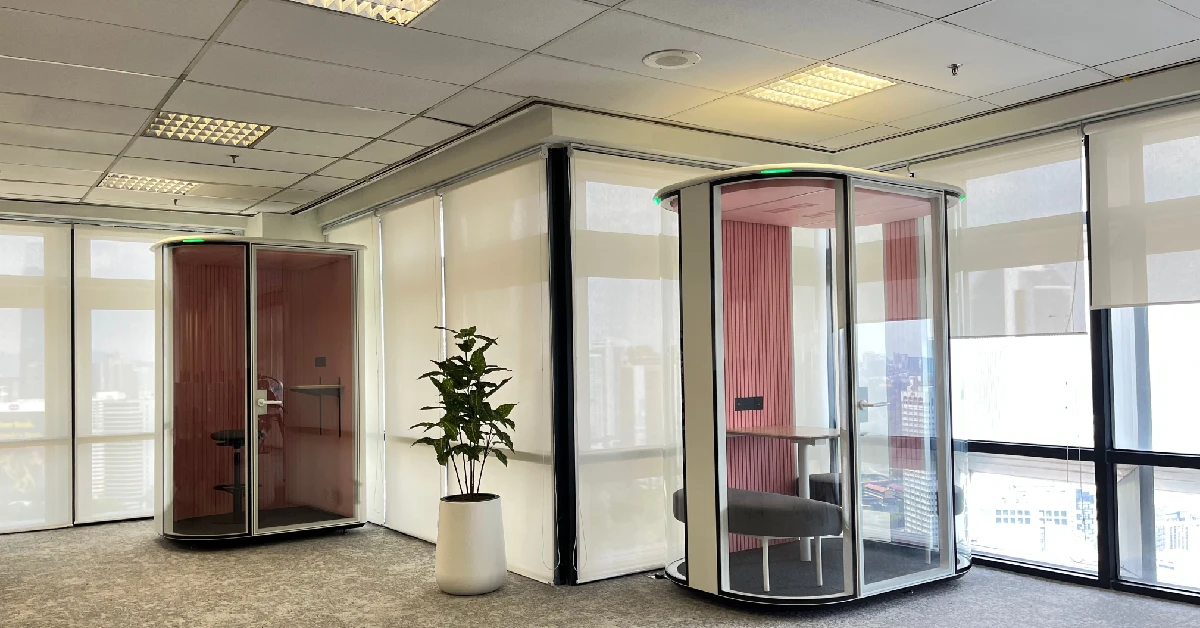
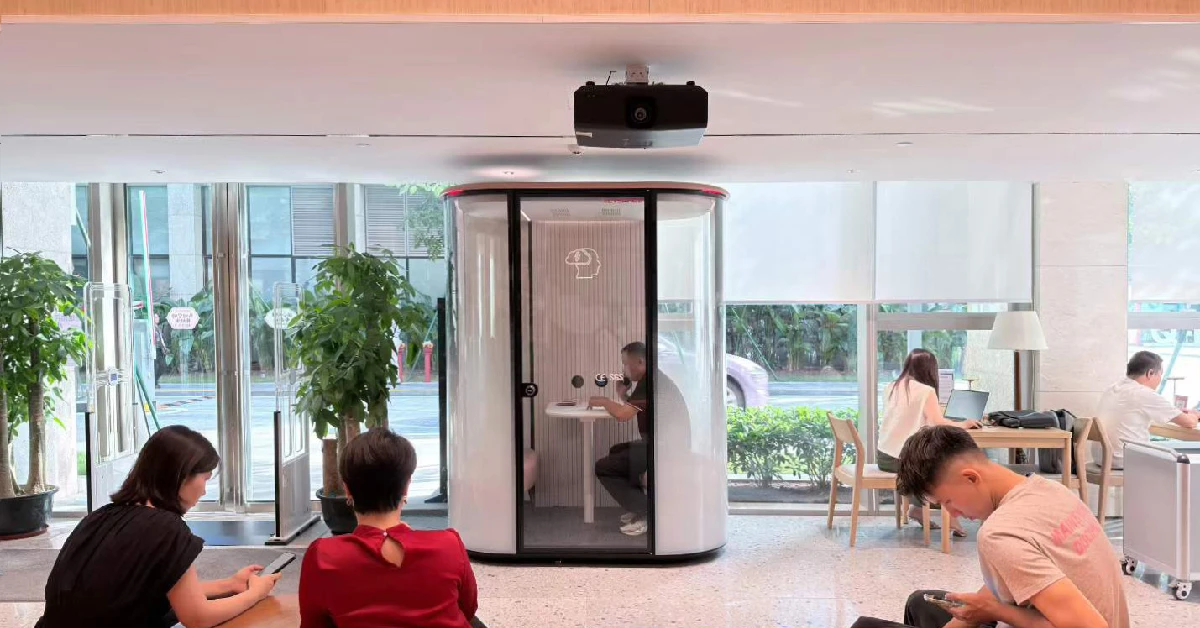
Privacy is not only about materials—it is also about placement. Positioning glass rooms away from heavy circulation paths reduces visual interruptions. Designers often place meeting pods or enclosed glass rooms toward the center or quieter zones of the office layout to minimize exposure.
3. Framing and Structural Division
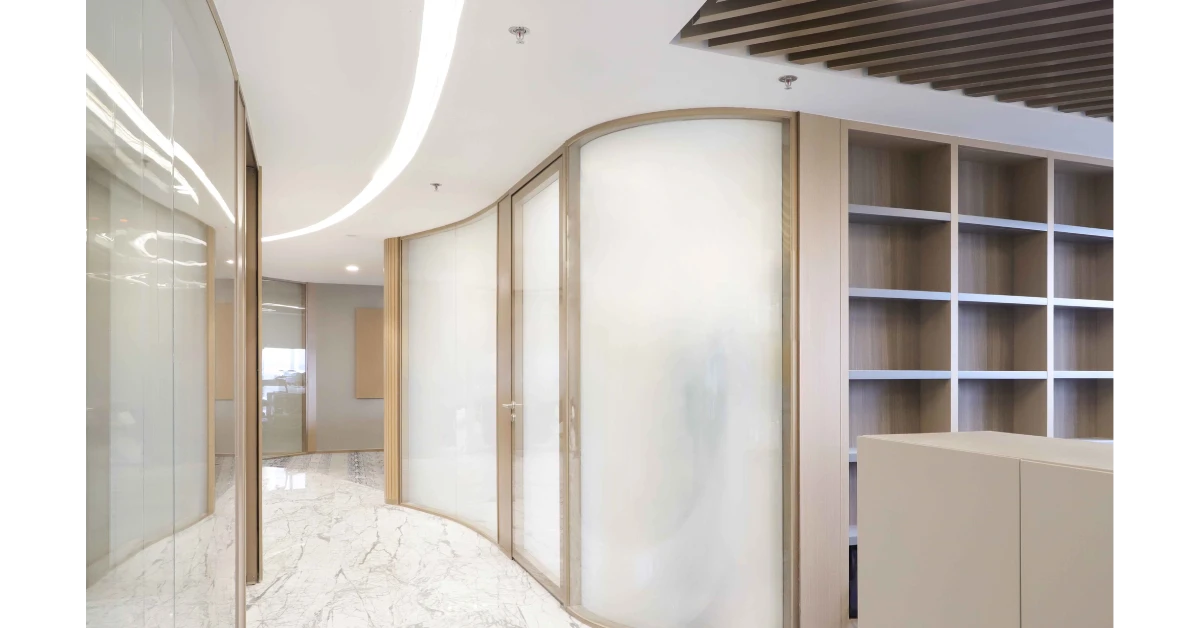
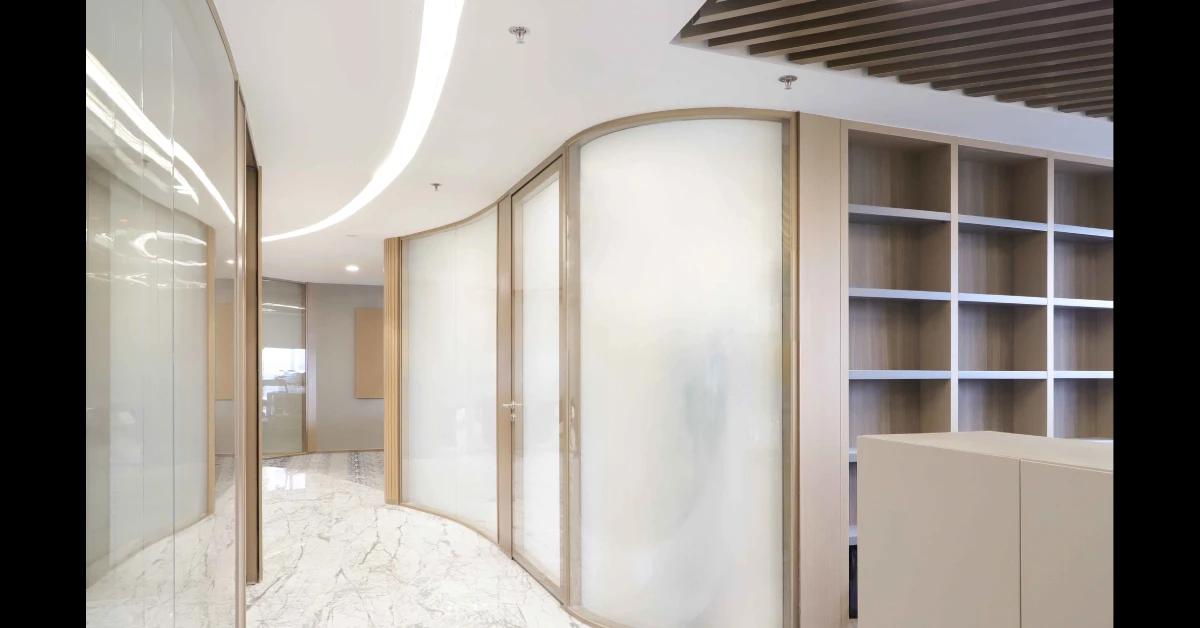
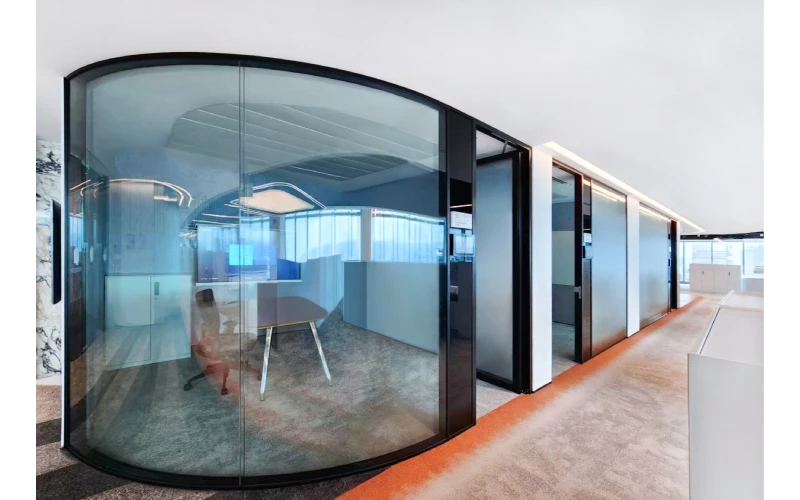
The use of aluminum or steel framing can subtly break up large glass surfaces. These divisions create rhythm in the visual field, reducing the feeling of being “on display” while still maintaining transparency. Frame geometry can also reinforce architectural identity.
4. Smart Glass Technologies
Switchable glass is becoming more common in premium office environments. With a simple control system, glass can change from transparent to opaque on demand. This flexibility allows teams to adjust privacy levels depending on the activity—ideal for hybrid work environments.
5. Interior Layering and Furnishing
Privacy does not always need to come from the glass itself. Interior elements such as shelving, acoustic panels, plants, or furniture placement can act as visual buffers. These layers soften direct sightlines and create a more comfortable spatial experience.
The Relationship Between Acoustic and Visual Comfort
While visual privacy focuses on sight, it is closely linked to acoustic performance. A glass meeting room may feel private visually, but if sound travels easily, the sense of separation is incomplete.
Modern partition systems often integrate acoustic materials such as PET panels, sealed door systems, and laminated glass to address both needs simultaneously. When visual and acoustic comfort are designed together, the result is a more functional and psychologically balanced workspace.
Glass Partitions in Hybrid Work Environments
As hybrid work becomes standard, office spaces are expected to support multiple working modes—collaboration, focus work, and video conferencing. Glass partitions play a key role in this flexibility.
They allow companies to create adaptable spaces that can shift between open collaboration zones and private meeting areas without major construction changes. Visual privacy strategies ensure that these transitions feel intentional rather than disruptive.
Conclusion
Designing visual privacy in glass partition systems is about more than obscuring views. It is about shaping how people experience space—balancing openness with comfort, transparency with focus, and connection with discretion.
Through techniques such as frosted finishes, smart glass, spatial zoning, and interior layering, modern offices can achieve environments that feel both open and protected. When applied thoughtfully, glass partitions become not just architectural elements, but tools for improving productivity and well-being.